Invisalign Marketing with Google Ads: How Dentists Get More Quality Leads
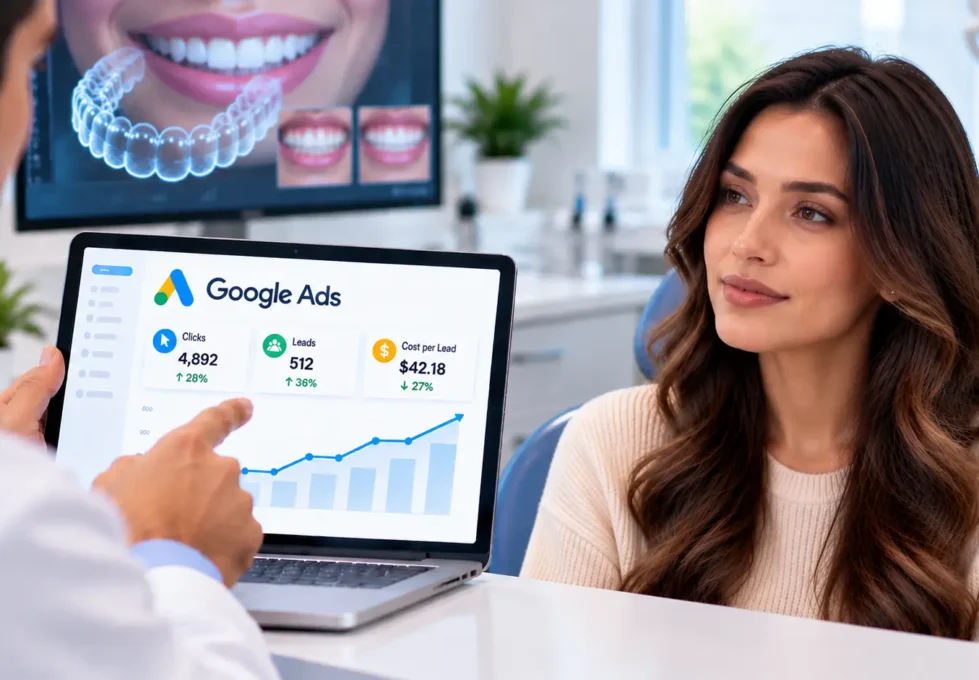
Invisalign is one of the highest-value treatments a dental practice can offer. A single case typically runs between $4,000 and $8,000, and patients are actively searching for it before they call anyone. That intent is exactly what makes Invisalign marketing through Google Ads so effective. When someone searches “Invisalign near me” or “clear aligners cost,” they are not browsing. They are ready to book a consultation.
The challenge is not whether Google Ads works for Invisalign. The verified 2026 data confirms it consistently ranks among the highest ROI channels in digital marketing for clinics. The challenge is to run it well enough to keep your cost per lead low. You also need to attract patients who actually show up and accept treatment. So, let’s get started!
What Does Invisalign Marketing on Google Ads Actually Cost in 2026
Before investing in Invisalign marketing for dentists, check the numbers. You need to calculate if your current CPL benefits your practice or not.
The formula is simple. CPL equals total Google Ads spend divided by total leads generated. If you spend $2,000 and generate 25 Invisalign consultation requests, your CPL is $80. The question is not whether $80 feels expensive. The question is whether $80 is profitable given what an Invisalign case is worth to your practice.
- $5 to $9 Average cost per click for Invisalign Google Ads in 2026
- 9% to 11% Typical conversion rate for optimized Invisalign landing pages
- $72 to $100 Average cost per lead for Invisalign and orthodontic Google Ads campaigns
These numbers assume a properly structured account. Poorly managed campaigns can push CPL over $150. This often happens with broad match keywords, generic landing pages, and no negative keyword list. The gap between a well-run and a poorly run account is not small, and it is almost always fixable.
2026 Benchmark: The LocaliQ and WordStream 2026 dental Google Ads report shows that the average cost per lead (CPL) for dental treatments is $72.97. It also notes a conversion rate of 10.67% and an average cost per click (CPC) of $8.00. Invisalign Marketing campaigns track closely to this when optimized. The maximum cost per lead (CPL) you can afford equals your target patient acquisition cost times your lead-to-patient conversion rate.
Why Your Invisalign Google Ads CPL Is High and How to Fix It
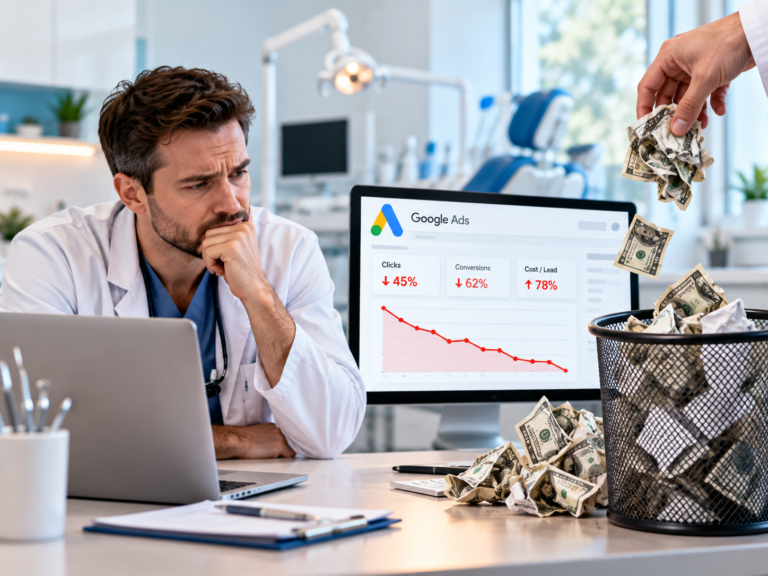
Most dental practices overpay for every Invisalign lead without knowing why. The fix is not a bigger budget. It is finding exactly where the account is leaking and closing each gap one by one.
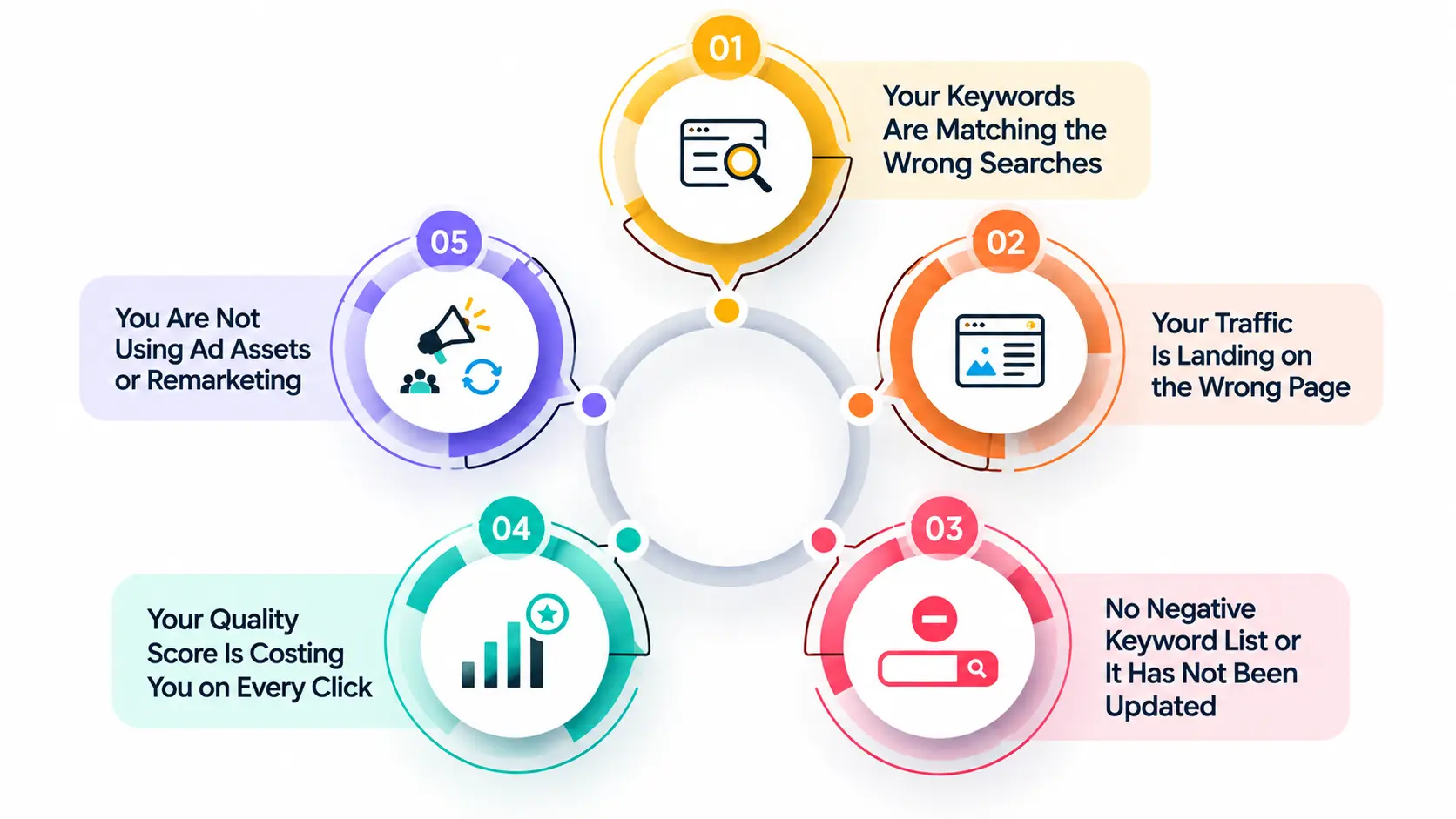
1. Your Keywords Are Matching the Wrong Searches
Broad match keywords are the most common CPL killer in any dental ppc account. They pull your invisalign ads into searches like “cheap braces for kids” or “orthodontist insurance coverage,” neither of which is your patient.
Switch entirely to exact and phrase match. Your budget stays focused on searches like “Invisalign consultation near me” and “how much does Invisalign cost in Connecticut” These are the queries that lead to booked consultations. This is the first and most impactful fix in any dental google ads audit for cost per lead.
2. Your Traffic Is Landing on the Wrong Page
Sending Invisalign clicks to your homepage is the second most common reason CPL stays high. A homepage built for all patients cannot convert a specific Invisalign inquiry at the same rate as a page built for that one treatment.
A focused landing page with before-and-after images, clear answers to cost and process questions, and a single booking call to action can boost conversion rates from 5% to 10% or more. That single change cuts your cost per lead in half without touching your ad spend.
3. No Negative Keyword List or It Has Not Been Updated
Irrelevant searches silently drain the budget every single day. Common ones for Invisalign accounts include free, DIY aligners, retainer, children’s braces, and insurance coverage queries. Without a strong negative keyword list, you are paying for clicks that will never become dental leads.
Review your search terms report weekly and add new negatives as they appear. This is not a one-time setup task. It is a recurring part of managing any dental ROI responsibly across a live account.
4. Your Quality Score Is Costing You on Every Click
Quality Score is Google’s 1 to 10 rating of how relevant your ads and landing page are to each search. A score below 6 means Google charges you more per click for the same ad position compared to a competitor with a higher score.
Add the Quality Score and Ad Relevance columns to your keyword report. Low ad relevance and a weak landing page experience are the two most common causes. Fix both and your CPC drops without changing a single bid.
5. You Are Not Using Ad Assets or Remarketing
Ad assets cost nothing to add and consistently improve CTR. Sitelinks to your pricing and booking pages, callouts for payment plans, and same-week consultations help attract patients. Structured snippets that list your treatments also give them more reasons to click before they see a competitor’s ad.
Pair this with a remarketing campaign targeting visitors who viewed your Invisalign page but did not book. This audience converts for much less than cold search traffic. It also recovers leads that your main campaign already paid to attract.
Quick math: At a $7 CPC, a 10% conversion rate, and a $5,000 average Invisalign case value, your ad spend to acquire one patient works out to roughly $70 per lead. If one in three leads becomes a patient, your cost per patient is around $210 against a $5,000 case. That is a strong return.
Why a Lower Invisalign CPL Does Not Always Mean Better Results
A falling CPL can signal a problem rather than progress. If your CPL drops from $100 to $60 but booked consultations stay flat, your campaign is pulling in cheaper, lower-intent traffic. Patients searching “Invisalign pricing near me” cost more to reach because they are closer to booking.
The number that actually matters is cost per booked patient. If one in three dental leads turns into a consultation and one in two accepts treatment, a $90 CPL campaign costs about $540 for each new patient. This is compared to a case value of $5,000. That calculation determines whether your Google Ads for dental practice investment is genuinely profitable.
Google Ads vs Facebook Ads for Dentists: Which Wins for Invisalign
Google Ads vs Facebook Ads for dentists’ Invisalign is a question worth answering with data rather than opinion. Google Ads captures patients already searching for Invisalign. They have intent. Facebook Ads reach people based on their demographics and interests. This means you might interrupt someone who wasn’t thinking about Invisalign at all. Here is how the numbers compare in the US market.
| Metric | Facebook and Instagram Ads | Google Ads |
| Average CPC | $0.80 to $2.50 | $5.00 to $9.00 |
| Cost Per Lead | $80 to $150 | $70 to $100 |
| Consultation Conversion Rate | 2% to 6% | 9% to 11% |
| Lead Quality (qualified prospects) | 40% to 50% | 60% to 70% |
| Typical Patient Acquisition Cost | $400 to $700 | $300 to $540 |
For most practices focused on how to lower cost per lead for dental practice, Google Ads should come first. A higher CPC is balanced by a much better consultation conversion rate and lead quality. This means your cost per booked patient is lower. Once Google Ads is profitable, paid social can support it. It can serve as a retargeting and brand awareness tool, not the main lead source.
What Strategies Help Dentists Optimize for AI Search in 2026
AI search is now directly affecting which Invisalign patients reach your Google Ads for your dental practice and which ones never see your ad at all.
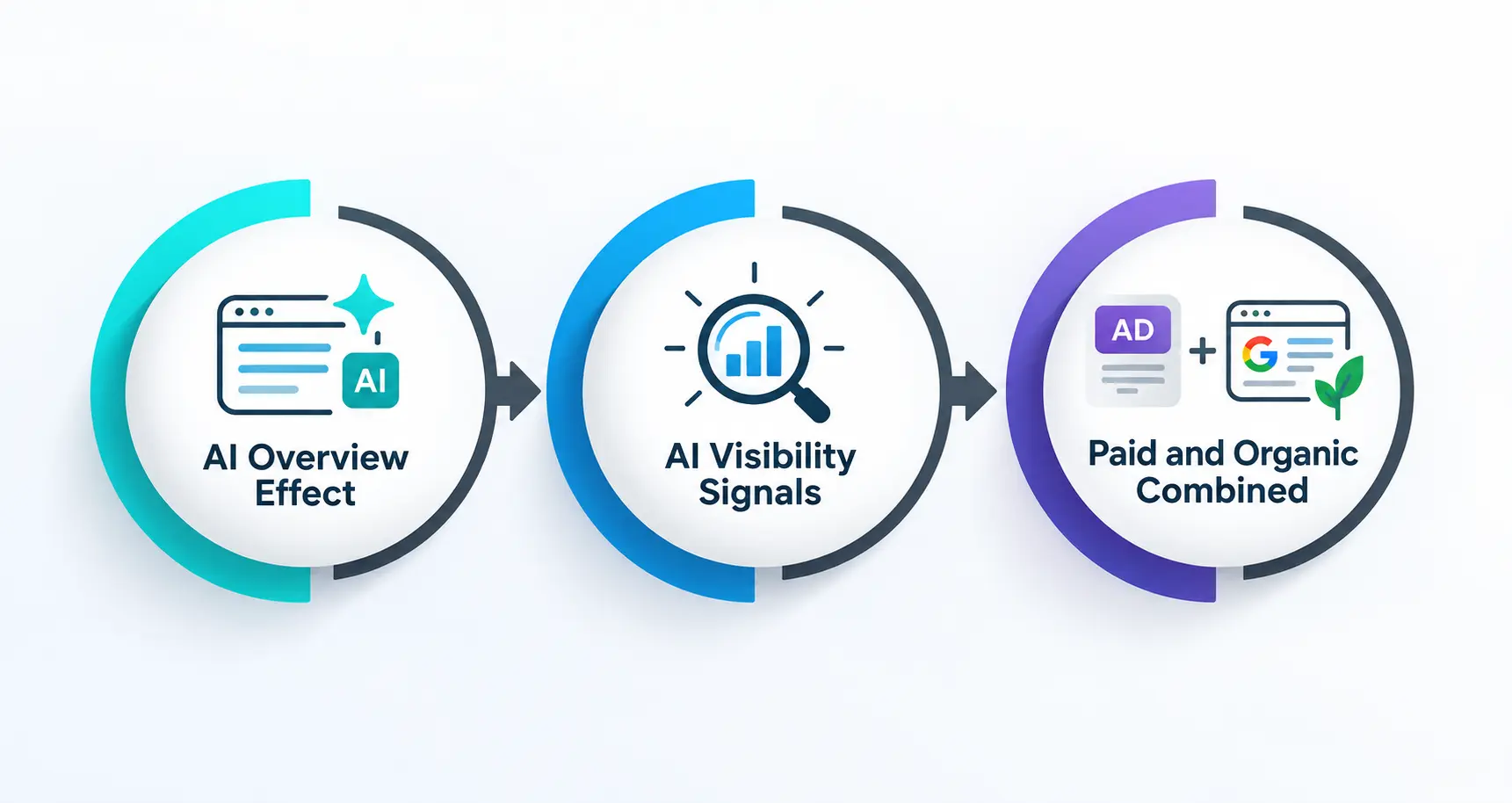
1. AI Overview Effect
Google AI Overviews now answer informational queries like “how much does Invisalign cost” without a single click. This means the patients who do reach your Invisalign Ads are increasingly booking-ready, not just browsing.
- Informational traffic is absorbed by AI before it reaches paid ads
- Clicks that do land on your page carry stronger booking intent
- Your conversion rate improves naturally as AI filters out low-intent searches
2. AI Visibility Signals
Strong AI search optimization for dentists is built on the same signals that support paid ads. A well-optimized practice becomes easier for both AI and patients to trust.
- Consistent reviews mentioning specific treatments like Invisalign and clear aligners
- Structured FAQ content that answers cost, process, and timeline questions directly
- Complete Google Business Profile with accurate categories and weekly activity
3. Paid and Organic Combined
The clearest shift in dental marketing trends in 2026 is that paid ads and AI visibility are no longer separate budgets. They reinforce each other directly.
- Practices with strong AI overview presence see higher click-through rates on their paid ads
- Trust built through reviews and structured content reduces hesitation at the landing page
- AI search visibility for cosmetic dentists builds over time, but paid ads bring quick bookings.
How a Dental Digital Marketing Company Can Lower Your Invisalign CPL
Managing Google Ads for dentists well requires ongoing attention. Keywords shift, competitors change bids, and Google’s auction dynamics move constantly. A dental digital marketing company takes care of clinic marketing. This way, your CPL remains competitive while you focus on your patients.
At Marketing A Clinic, we work with dental practices across Connecticut and the wider US to build and manage Google Ads campaigns specifically around high-value treatments like Invisalign and implants. A strong dental marketing strategy, a properly set-up account, and an optimised landing page help reduce CPL and boost booked consultations.
As a clinic marketing agency, we combine dental expertise with data-driven paid search and AI visibility to attract high-intent patients. Invisalign marketing becomes a measurable revenue system – not just an expense. Ready to grow? Let’s turn searches into patients.
Get a Free Invisalign Google Ads Audit From Marketing A Clinic
Most dental practices are paying 30 to 50 % more per Invisalign lead than they need to, and the fix usually takes less than two weeks to implement.
Marketing A Clinic audits your current Google Ads account, identifies exactly where budget is being wasted, and rebuilds your Invisalign campaigns around the structure that consistently delivers CPLs in the range. Book a FREE strategy session and find out what your practice’s real cost per Invisalign patient should be.
Frequently Asked Questions
Q1. How much does Invisalign marketing on Google Ads cost per lead?
Well-managed Invisalign marketing campaigns average $72 to $100 per lead in 2026, with a CPC of $5 to $9 and a 9 to 11 percent conversion rate.
Q2. How do Google Ads help dental practices get more Invisalign patients?
Google Ads for dental practices capture patients already searching for Invisalign, delivering higher-intent leads at a lower CPL than social media advertising.
Q3. What is a good cost per lead for an Invisalign Google Ads campaign?
A cost per lead between $70 and $100 is competitive for Invisalign in most US markets. Poorly managed accounts regularly run above $150.
Q4. Should dental practices use Google Ads or Facebook Ads for Invisalign?
Begin with Google Ads for dentists to attract intent-based traffic. Once the account is profitable, add Facebook for retargeting and brand awareness.
Q5. How does a dental Google Ads audit lower cost per lead?
A dental Google Ads audit for cost per lead removes wasted spend on broad keywords and irrelevant traffic, which reduces CPL by 20 to 40 percent.
Q6. What landing page converts Invisalign Google Ads traffic best?
A dedicated Invisalign ads page with before-and-after visuals, direct cost information, and a single call to action consistently converts at 9 to 11 %.
Q7. How does AI search affect Invisalign Google Ads performance in 2026?
AI search visibility for cosmetic dentists removes informational searches. This focuses on paid ads, which attract more booking-ready patients and yield better conversion rates.
Q8. What budget should a dental practice start with for Invisalign Google Ads?
A dental marketing strategy that starts with $2,000 to $3,000 monthly typically brings in steady Invisalign consultations in many US suburban areas.